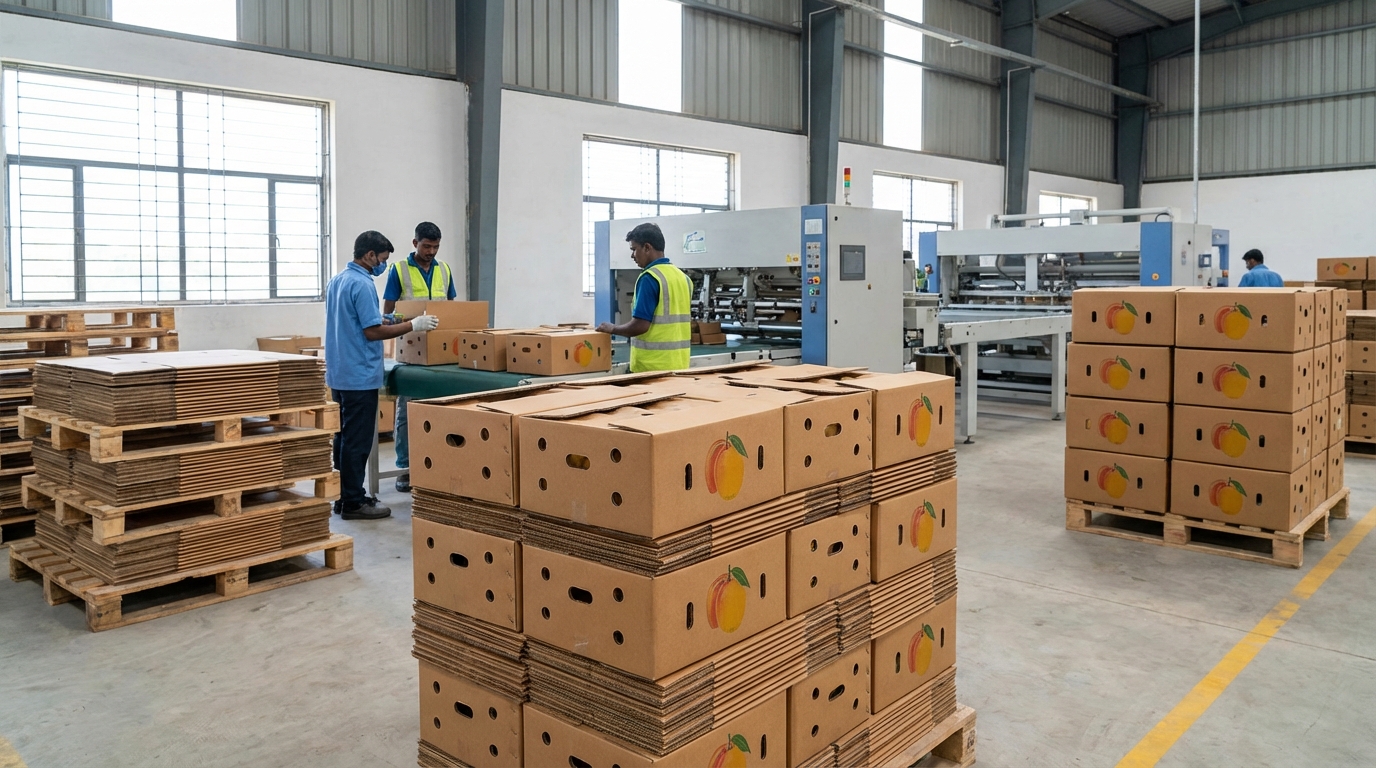
Export Packaging Requirements for International Shipping
Complete guide to export-quality corrugated packaging. Learn ISPM-15 compliance, moisture resistance, and international shipping requirements.
Export packaging has stricter requirements than domestic shipping. Your boxes must survive longer transit times, multiple handlings, varying climates, and meet international regulations.
Why Export Packaging is Different
Domestic vs Export:
- Transit time: 2-3 days domestic vs 4-8 weeks export
- Handling: 5-8 touches domestic vs 15-25 touches export
- Climate: Controlled vs. varying humidity (sea freight)
- Regulations: Minimal vs. ISPM-15, FSSAI, country-specific
Failure costs:
- Rejected shipments at customs
- Product damage claims
- Customer penalties
- Lost repeat business
Key Requirements
1. Enhanced Strength
Minimum specifications:
- 5-ply for any product >10 kg
- Minimum 200 GSM kraft liners
- BC-flute or double-wall construction
- BCT with 6x safety factor (vs. 3-4x domestic)
Why: Stacking in containers (6-8 layers), humidity exposure, rough handling.
2. Moisture Resistance
Sea freight humidity: 70-90% in containers Impact: BCT drops 40-60% in high humidity
Solutions:
- Wax-coated corrugated (+₹3-5/box)
- Water-resistant adhesives
- Moisture barrier liners
- Desiccant packets inside boxes
3. ISPM-15 Compliance
What is it: International Standards for Phytosanitary Measures (wood pest prevention)
Applies to: Wooden pallets, crates, dunnage used with corrugated boxes
Requirements:
- Heat-treated or fumigated wood
- Official ISPM-15 stamp/mark
- Documentation for customs
Corrugated exemption: Corrugated boxes themselves are exempt, but pallets must comply.
4. Clear Labeling
Required markings:
- Handling symbols (fragile, this side up, keep dry)
- Country of origin
- Product description
- Weight (gross and net)
- Dimensions
- Importer/exporter details
- Shipping marks
Language: English + destination country language
Country-Specific Requirements
USA
- FSVP (Foreign Supplier Verification Program) for food
- FDA registration for food/cosmetics
- CBP marking requirements
- Wood packaging ISPM-15
European Union
- CE marking (certain products)
- REACH compliance (chemicals)
- Food contact materials regulations
- Sustainable packaging requirements (2024+)
Middle East
- Halal certification (food)
- High-humidity resistant packaging
- Arabic labeling
Australia
- Strict biosecurity (BICON)
- ISPM-15 for all wood packaging
- Fumigation certificates
Best Practices
Box Design
- Use 5-ply minimum for exports
- Double-wall corners for heavy items
- Ventilation for produce (if applicable)
- Inner lining for moisture protection
Testing
- Drop test from 1.5m (6 sides)
- Vibration test (simulating road/sea transport)
- Humidity test (24-48 hours at 90% RH)
- Stacking test (maximum load × time)
Documentation
- Commercial invoice
- Packing list
- Bill of lading
- Certificate of origin
- Test certificates (if required)
Cost Analysis
Export-grade vs Standard (per box):
| Component | Standard | Export-Grade | Difference |
|---|---|---|---|
| Paper (higher GSM) | ₹15 | ₹22 | +₹7 |
| Moisture coating | ₹0 | ₹4 | +₹4 |
| Testing certification | ₹0 | ₹2 | +₹2 |
| Enhanced printing | ₹2 | ₹5 | +₹3 |
| Total | ₹17 | ₹33 | +₹16 |
ROI: One rejected shipment costs ₹50K-2L. Export-grade packaging is insurance.
Key Takeaways
- Always use 5-ply for exports
- Moisture resistance is critical for sea freight
- ISPM-15 for pallets, not boxes
- Country-specific requirements vary - research first
- Test boxes before shipping
- Document everything for customs
Ready to streamline your business?
Try Packwares CMS free and transform your operations.