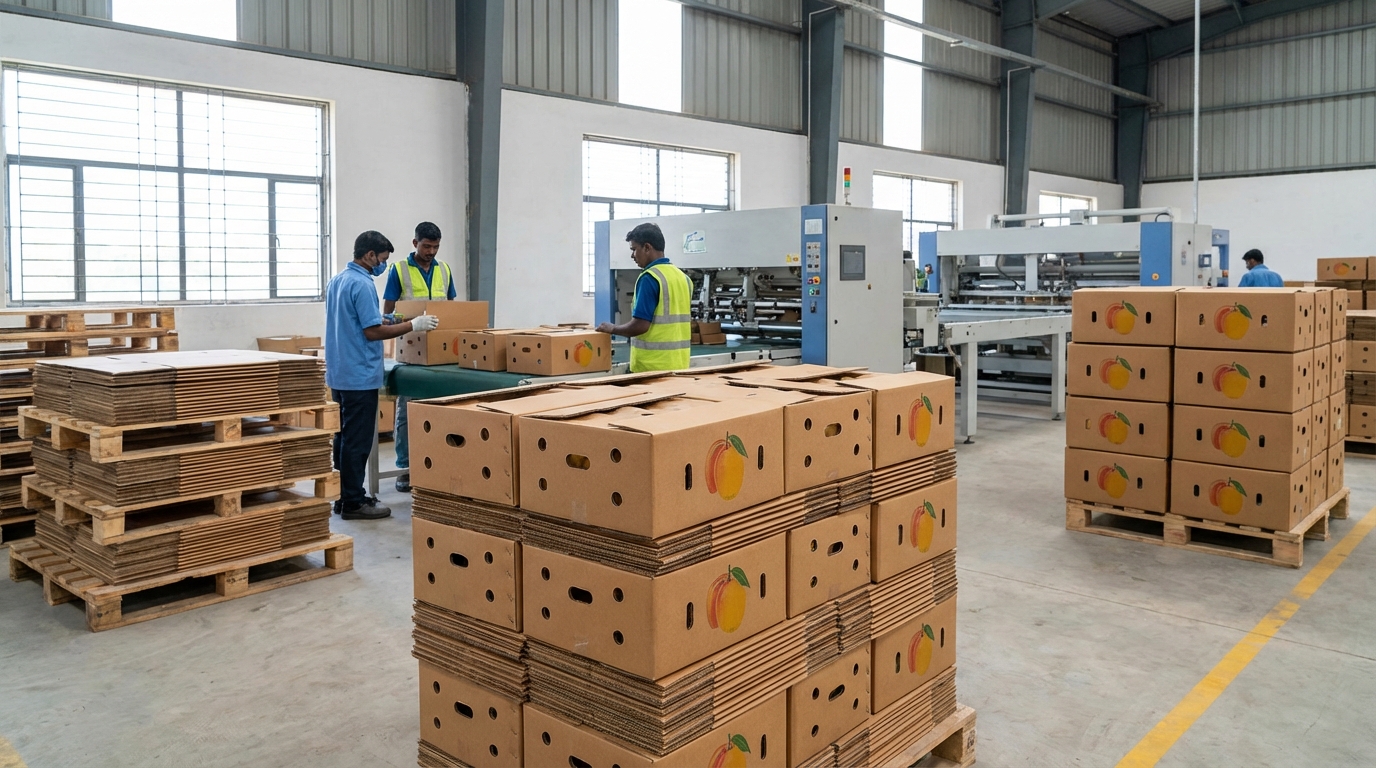
Complete Guide to Food-Safe Corrugated Packaging
How a food manufacturer avoided ₹50 lakh contamination disaster. Complete guide to FSSAI compliance, testing, and food-grade corrugated certification.
Priya Mehta's organic spice company was days from disaster when testing revealed mineral oil contamination from packaging. Here's how she fixed it and made food-safety her competitive advantage.
"Spice Route" built a reputation for purity. Then 2023 lab tests found mineral oils in samples. Source? Recycled corrugated boxes with newspaper ink residues migrating into spices.
Potential cost: ₹25L inventory disposal + ₹15L lost sales + ₹5-10L penalties + brand damage.
They caught it before shipping. Priya became a food-safe packaging expert by necessity. Today, it's a marketing advantage.
Why Food Packaging Needs Special Corrugated
Migration = chemical transfer from packaging to food.
Regular corrugated contaminants:
- Mineral oils from newsprint (carcinogenic)
- Phthalates from inks (hormone disruptors)
- Heavy metals from colored inks (toxic)
- Formaldehyde from adhesives
Business impact:
- FSSAI penalties: ₹5-25L first, ₹10-50L repeat + 7 years jail
- Recalls cost 10-50x packaging investment
- License suspension
Opportunity: Food & beverage = 46% of corrugated market. Food-safe boxes command 15-25% premium with long contracts.
Key Regulations
India FSSAI: FSS Regulations 2018 require contaminant-free materials, appropriate for food type, proper labeling. Testing: overall migration, specific tests (heavy metals, mineral oils), third-party certification.
International: EU strictest (mineral oil <0.6 mg/kg), USA FDA CFR Title 21.
Priya invested ₹2.5L for EU cert → 30% export at 40% higher margins.
Food-Safe Materials
Virgin Fiber Only: Never recycled (contains contaminants). Exception: Recycled WITH barrier.
Priya's spec: 100% virgin kraft, food-grade flute, batch certificates, unique batch IDs.
Functional Barriers:
- Aluminum foil (+₹3-5/box): Complete barrier
- Food-grade PE (+₹1-2/box): Thin plastic
- Food-safe wax (+₹0.50-1/box): Natural
- Parchment liner (+₹0.80-1.50/box): Greaseproof
Safe inks/adhesives: Water-based inks only, starch adhesives (naturally food-safe), no printing on inner surface.
Testing Process
Required tests:
- Overall Migration (₹8-15K, 10-15 days): Total substances transferring
- Specific Migration (₹5-12K each, 7-12 days): Heavy metals, oils, phthalates
- Sensory (₹10-20K): Taste/odor impact
Labs: Intertek, SGS, Eurofins, TÜV SÜD, CFTRI Mysore (NABL-accredited).
Supplier must provide: Declaration of Compliance, test certificates, batch traceability, GMP certification.
By Food Category
Dry (spices, grains): Virgin + PE, no direct contact.
Fresh produce: Wax-coated, ventilated.
Frozen: Wax-impregnated.
Baked goods: Virgin + greaseproof.
Dairy: Highest risk, virgin + aluminum/PE.
Key Takeaways
- Food-safe ≠ standard (explicit spec required)
- Virgin or functional barrier (never risk recycled)
- Testing = insurance (₹50K vs ₹50L disaster)
- ALL components food-safe (tape, liner, ink)
- Premium pricing justified (15-25%)
- Traceability enables quick response
Priya: "Food-safe saved my brand, opened exports, justified premium. Question isn't whether you can afford it—it's whether you can afford NOT to."
Ready to streamline your business?
Try Packwares CMS free and transform your operations.