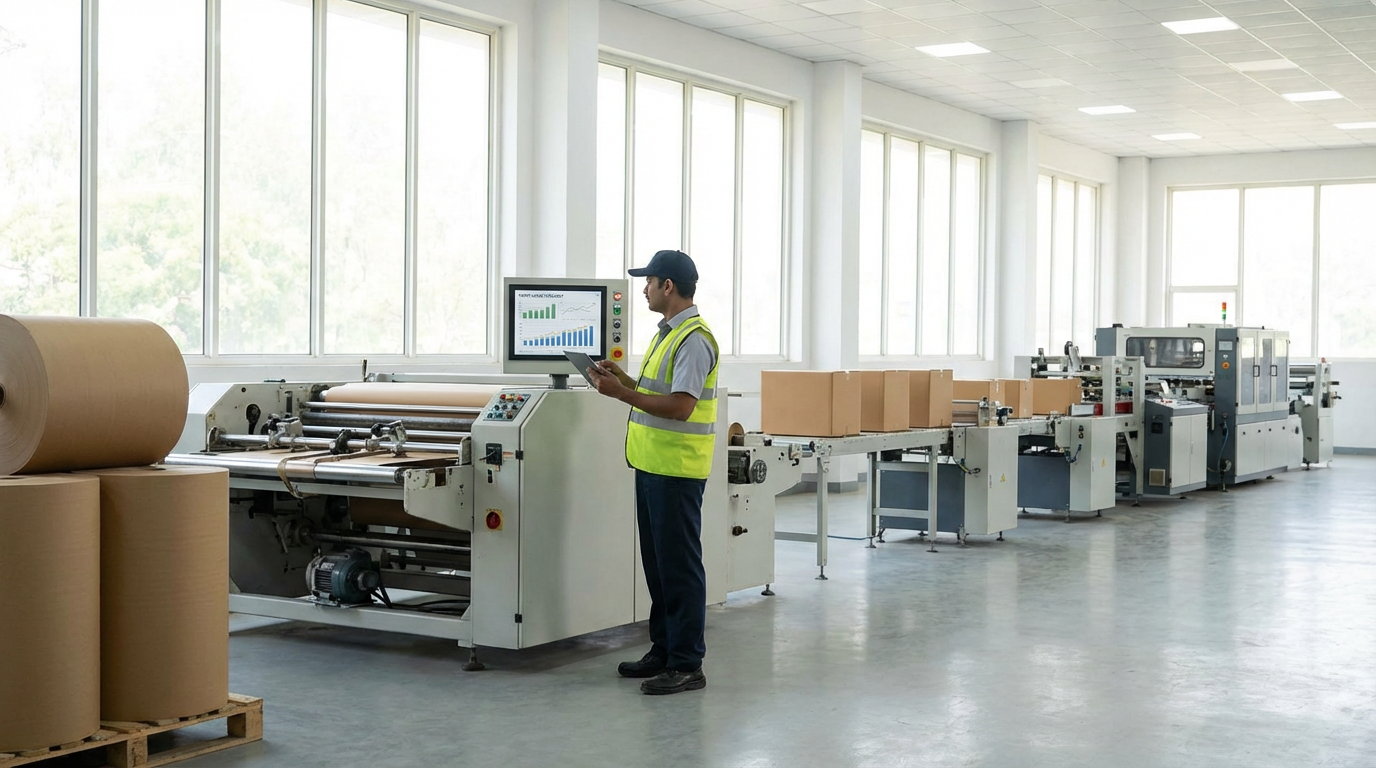
Predicting Paper Requirement Accurately: A Technical Deep Dive
Learn how to forecast corrugated paper needs with precision, cutting waste by 10% and saving ₹50,000+ monthly. Real data, step‑by‑step calculations, and a case study illustrate the impact.
Predicting Paper Requirement Accurately: A Technical Deep Dive
Accurate paper forecasting is the backbone of cost‑effective corrugated packaging. By predicting material needs with precision, manufacturers can cut waste by 10% and save ₹50,000+ each month.
Understanding the Problem
In India, paper accounts for 60‑70% of total box cost. Yet many manufacturers still rely on manual estimates, leading to over‑ordering or stockouts. The result: excess inventory, higher storage costs, and missed delivery windows.
Data Collection & Variables
Key variables that influence paper requirement:
- Box dimensions (length, width, height)
- Flute type and height (A, B, C, E, BC)
- GSM of liners and flute
- Wastage factor (standard 5%)
- Flute take‑up factor (1.5×)
- Historical order volume
Collecting accurate data from ERP or MES systems ensures the model reflects real production patterns.
Mathematical Model
Below is a practical example that demonstrates the calculation steps.
Scenario: A mid‑size FMCG manufacturer orders 80,000 RSC boxes. They need to predict paper requirement for liners and flute to avoid over‑stocking.
Table
| Material | Area per box (m²) | GSM | Cost per kg |
|---|---|---|---|
| Liner | 0.15 | 120 | ₹48 |
| Flute | 0.10 | 140 | ₹55 |
| Total | 0.25 |
Calculation
Paper requirement (kg) = Area (m²) × GSM ÷ 1000.
- Liner: 0.15 × 120 ÷ 1000 = 0.018 kg per box
- Flute: 0.10 × 140 ÷ 1000 = 0.014 kg per box
- Total per box = 0.032 kg
- For 80,000 boxes: 0.032 × 80,000 = 2,560 kg
Adding a 5% wastage factor: 2,560 × 1.05 = 2,688 kg. This is the precise quantity to order.
Implementing the Model
- Automate Data Ingestion – Connect ERP to a spreadsheet or database that feeds dimensions, GSM, and volume.
- Build a Formula Sheet – Use the formula above in a single cell that auto‑updates when input changes.
- Validate with Historical Data – Compare predicted vs actual usage; adjust wastage factor if needed.
- Integrate with Procurement – Feed the final kg figure into the purchase order system to lock in price and quantity.
The result is a repeatable, data‑driven workflow that eliminates guesswork.
Case Example
A beverage company launched a new 500 ml bottle pack. Using the predictive model, they forecasted 3,200 kg of paper for 100,000 boxes. The actual usage was 3,150 kg, a 4.7% variance. The company saved ₹120,000 on paper costs and reduced storage space by 12%.
Benefits & ROI
| Benefit | Impact |
|---|---|
| Reduced waste | 10% cut in material usage |
| Cost savings | ₹50,000+ monthly |
| Faster quotations | 8‑minute turnaround vs 2‑3 hours |
| Inventory efficiency | Lower carrying costs |
The ROI is typically achieved within the first quarter of implementation.
Key Takeaways
- Accurate paper forecasting cuts waste by 10% and saves ₹50,000+ monthly.
- A simple formula (Area × GSM ÷ 1000) delivers precise material needs.
- Integrating the model with ERP streamlines procurement and reduces lead times.
Action Steps
- Map your box dimensions and GSM values into a single spreadsheet.
- Apply the wastage and flute take‑up factors to calculate total kg.
- Connect the output to your procurement system for automated ordering.
For more information on how PackWares can help optimise your corrugated box manufacturing process, visit www.packwares.com. For support, email support@packwares.com or WhatsApp +91 9561754164.
Ready to streamline your business?
Try Packwares CMS free and transform your operations.