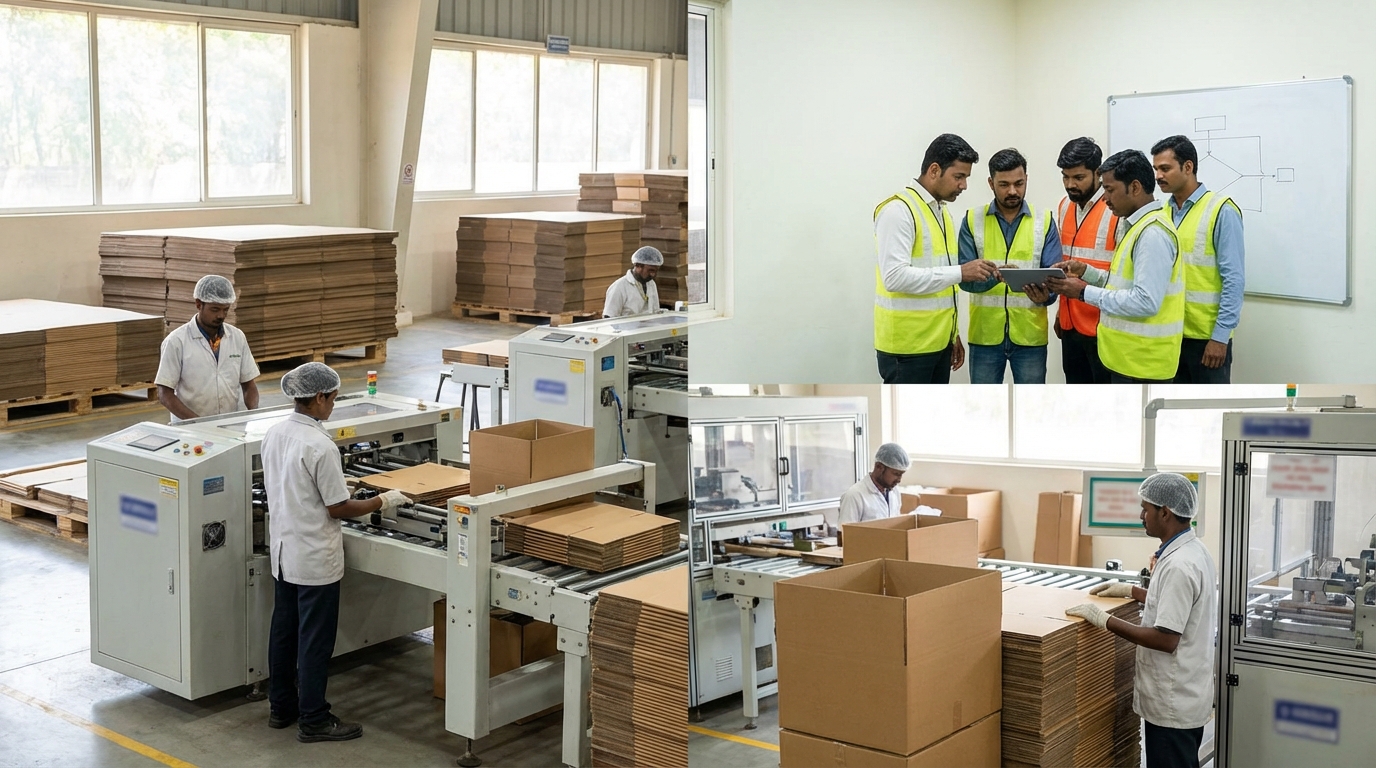
Effective Team Management in Packaging Manufacturing
Build and manage a productive team in your corrugated box business. Learn hiring, training, and motivation strategies that work.
Running a successful corrugated box business requires more than just machines—it requires a skilled, motivated team.
Key Roles in a Box Manufacturing Business
Production Team:
- Machine operators (corrugator, printer, die-cutter)
- Quality control inspectors
- Material handlers
- Maintenance technicians
Sales and Customer Service:
- Sales executives
- Customer relationship managers
- Order coordinators
Administration:
- Accounts and billing
- Inventory managers
- Production planners
Management:
- Production supervisor
- Sales manager
- General manager/Owner
Start small. Many successful businesses begin with 5-10 people wearing multiple hats.
Hiring the Right People
What to Look For:
Machine Operators:
- Previous manufacturing experience (preferred but not required)
- Attention to detail
- Reliability and punctuality
- Willingness to learn
- Physical fitness (standing, lifting)
Sales Team:
- Communication skills
- Understanding of packaging industry
- Customer service mindset
- Local market knowledge
- Self-motivated
Skills vs. Attitude: Hire for attitude, train for skills. A motivated person with no experience is better than an experienced person with bad attitude.
Training Your Team
New Operator Training (2-4 Weeks):
Week 1: Safety and basics
- Machine safety protocols
- Material handling
- Basic operations
Week 2: Hands-on practice
- Supervised machine operation
- Quality standards
- Troubleshooting basics
Week 3: Independent operation
- Solo machine running with supervision nearby
- Speed and efficiency building
Week 4: Quality focus
- Defect identification
- Problem solving
- Meeting production targets
Ongoing Training:
- Monthly safety refreshers
- New product/technique training
- Cross-training on different machines
Invest in training. Skilled operators produce better quality with less waste.
Setting Clear Expectations
Production Targets:
- Boxes per hour/shift
- Quality standards (acceptable defect rate)
- Setup time targets
- Waste limits
Example Operator Scorecard:
- Production speed: 90% of target
- Quality: <2% defect rate
- Attendance: <2 absences per month
- Safety: Zero accidents
Make expectations clear: Everyone should know exactly what "good performance" looks like.
Motivation and Retention
What Motivates Team Members:
Fair Pay: Pay market rates or above. Underpaying leads to high turnover.
Recognition: Acknowledge good work publicly:
- "Operator of the Month"
- Bonus for zero-defect weeks
- Public praise in team meetings
Growth Opportunities:
- Junior operator → Senior operator
- Operator → Supervisor
- Cross-training → higher pay
Good Working Conditions:
- Clean, well-lit workplace
- Functional equipment
- Proper safety gear
- Reasonable working hours
Respect: Treat everyone with dignity. Listen to their ideas. They know the machines better than anyone.
Communication Best Practices
Daily Huddles (15 minutes):
- Production targets for the day
- Priority orders
- Safety reminders
- Quick wins from yesterday
Weekly Team Meetings:
- Review last week's performance
- Discuss challenges and solutions
- Recognize top performers
- Share upcoming changes
Open Door Policy: Encourage team members to raise concerns directly. Address issues quickly before they become big problems.
Handling Performance Issues
The 3-Step Approach:
Step 1 - Coaching Conversation: "I noticed [specific issue]. Let's discuss how we can improve."
- Focus on behavior, not person
- Ask for their perspective
- Agree on improvement plan
Step 2 - Formal Warning: If no improvement after 2-4 weeks:
- Document the issue
- Written warning with clear expectations
- Timeline for improvement
Step 3 - Final Decision: If still no improvement:
- Consider different role (if available)
- Termination (last resort)
Most performance issues can be resolved with clear communication and support.
Building a Safety Culture
Safety First, Always:
- Mandatory safety training for all employees
- Regular equipment maintenance
- Safety gear provided and enforced
- No penalties for reporting near-misses
Safety Metrics:
- Days since last accident
- Near-miss reports (more reports = better awareness)
- Safety inspection scores
One serious accident can shut down your business. Invest in safety.
Key Takeaways:
- Hire for attitude, train for skills
- Set clear expectations and targets
- Recognize and reward good performance
- Communicate openly and regularly
- Invest in training and safety
- Handle issues promptly but fairly
Ready to streamline your business?
Try Packwares CMS free and transform your operations.