What is Trim Loss in Corrugated Box Manufacturing?
Learn what trim loss is, how to measure it, and proven strategies to minimize material waste in corrugated production.
What is Trim Loss?
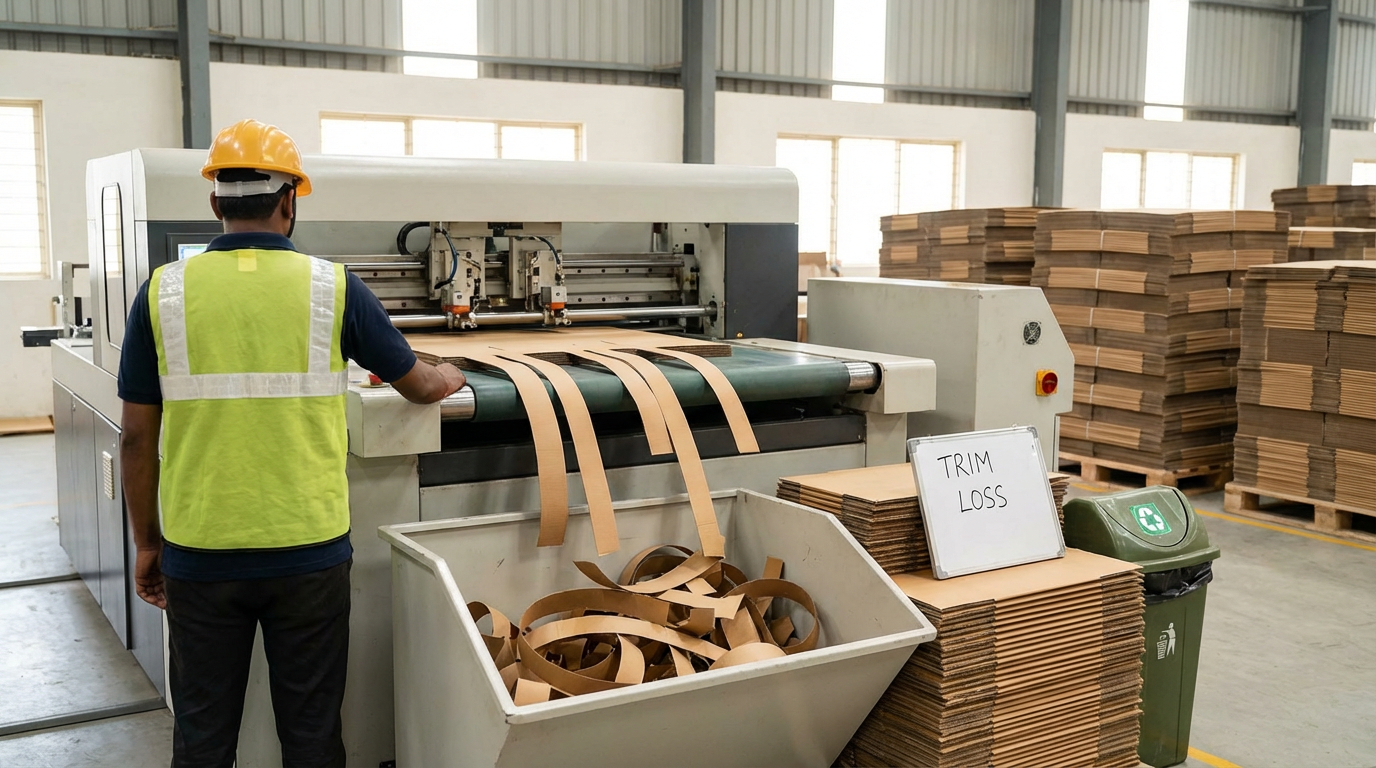
Trim loss refers to the excess material removed during the cutting process in corrugated box manufacturing.
Understanding Trim Loss
Trim loss is a critical factor in the production of corrugated boxes, as it directly affects the cost and efficiency of the manufacturing process. In a typical corrugated box production line, sheets of corrugated board are cut to size using a die-cutting machine. However, due to the design of the box and the cutting process, some material is inevitably wasted.
Causes of Trim Loss
Trim loss can occur due to various reasons, including the design of the box, the cutting tool, and the material being used. For example, if the box design requires a complex cutting pattern, more material may be wasted during the cutting process. Similarly, if the cutting tool is not optimized for the specific material being used, it can result in excessive trim loss.
Measuring Trim Loss
To minimize trim loss, it is essential to measure and track it accurately. Here is an example of how trim loss can be calculated:
"scenario": "A corrugated box manufacturer produces 1000 boxes per day, with an average trim loss of 10%.", "table_csv": "Box Size,Trim Loss (cm),Trim Loss (%)\nSmall,5,10\nMedium,7,12\nLarge,10,15", "calc_explanation": "Trim loss can be calculated using the formula: Trim Loss (%) = (Trim Loss (cm) / Box Size (cm)) * 100"
Minimizing Trim Loss
To minimize trim loss, manufacturers can take several steps, including optimizing box design, improving cutting tool design, and using advanced cutting technologies. For instance, a manufacturer can redesign their boxes to reduce the amount of material required, thereby minimizing trim loss.
Case Study: Reducing Trim Loss through Design Optimization
A leading corrugated box manufacturer in India was able to reduce its trim loss by 5% by optimizing its box design. The company worked with its design team to create a new box design that required less material while maintaining the same level of strength and durability. As a result, the company was able to save ₹50,000 per month on material costs.
Conclusion
Trim loss is a significant factor in corrugated box manufacturing, and minimizing it can have a substantial impact on a company's bottom line. By understanding the causes of trim loss, measuring it accurately, and taking steps to minimize it, manufacturers can reduce waste, improve efficiency, and increase profitability.
Key takeaways:
- Trim loss can account for up to 15% of total material costs
- Optimizing box design and cutting tool design can help minimize trim loss
- Advanced cutting technologies can also help reduce trim loss
Action steps:
- Conduct a thorough analysis of your current box design and cutting process to identify areas for improvement
- Work with your design team to optimize box design and reduce material requirements
- Explore advanced cutting technologies and tools to improve cutting efficiency and reduce trim loss
Ready to streamline your business?
Try Packwares CMS free and transform your operations.