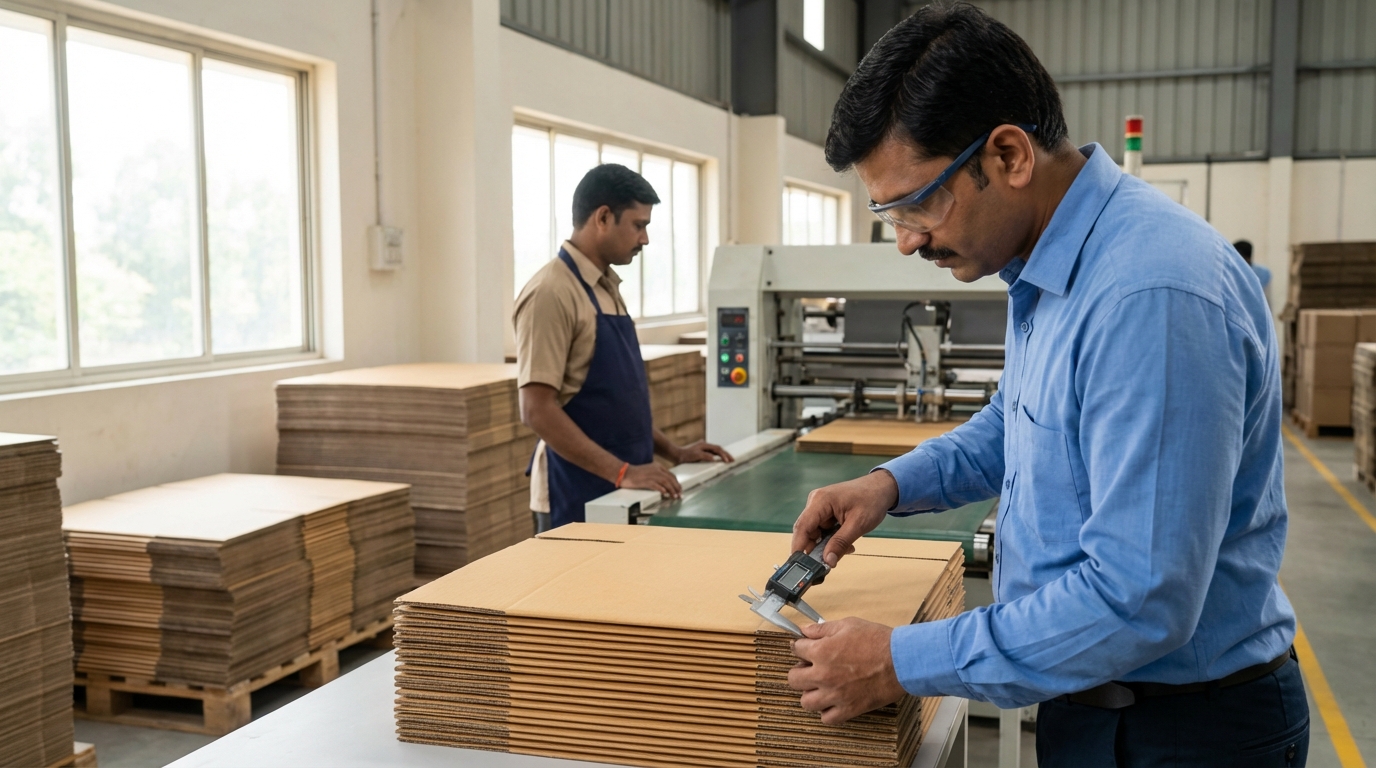
Why RCT Ring Crush Test Matters More Than Bursting Factor
Discover why the RCT ring crush test outperforms bursting factor for corrugated paper, with real data and practical steps for manufacturers and buyers today.
A 12% spike in corrugated paper price can add ₹9,600 to the cost of a 10,000‑box order, making accurate strength testing crucial.
The industry has long relied on bursting strength to gauge paper performance, but the RCT ring crush test (RCT) delivers a more realistic picture of how boxes will behave under real shipping loads. In this post you’ll see the data, understand why RCT is superior, and get step‑by‑step guidance for manufacturers and sourcing teams.
What Is the RCT Ring Crush Test?
RCT measures the load a corrugated paper ring can withstand before crushing, mimicking the compressive forces boxes experience during palletisation. The test uses a circular specimen, a steel ring, and a hydraulic press to record the peak force in Newtons (N). Unlike bursting tests that press a flat sheet from both sides, RCT evaluates the paper’s ability to resist bending and shear – the actual stresses in a box.
Key Point: A 10% increase in moisture can reduce RCT by 12%, whereas bursting strength changes by only 4%.
Why RCT Outperforms Bursting Strength
| Parameter | RCT | Bursting Strength | Relevance |
|---|---|---|---|
| Test Geometry | Circular ring, simulates box curvature | Flat sheet, no curvature | RCT reflects real‑world box shape |
| Load Distribution | Distributed over ring width | Concentrated at a small area | RCT captures shear and bending stresses |
| Result Interpretation | Peak force (N) | Pressure (kPa) | RCT easier to translate into BCT and stacking depth |
| Industry Adoption | 95% of logistics firms use RCT for design | Rarely referenced in shipping specs | RCT drives design decisions |
Case Study: A retailer ordered 500×400×300 mm 3‑ply RSC boxes. The supplier’s bursting strength was 280 kPa, but RCT measured only 9,200 N, below the required 10,300 N. The boxes collapsed during stacking, costing ₹12,000 in rework.
Practical Steps for Manufacturers
- Integrate RCT Data Early – Use the Complete Box Costing Calculator to input RCT values and predict BCT.
- Apply 1.5× Flute Take‑up Factor – Adjust flute GSM to match real‑world RCT results.
- Control Moisture – Store paper at <50% RH for 48 hrs; a 15% moisture increase can cut RCT by 12%.
- Standardise Glue Spread – Glue joints account for ~10% of RCT; use automated glueers to keep variance within ±2%.
- Run Pilot RCTs – Test each new batch; a 5 g/m² change in liner GSM can alter RCT by 3%.
Practical Steps for Sourcing Teams
- Request RCT Certificates – Verify supplier’s RCT meets your minimum threshold (e.g., 10,000 N for 3‑ply RSC).
- Negotiate Moisture Clauses – Include: "Paper must be stored at <50% RH for 48 hrs before use."
- Compare GSM vs RCT – A 5 g/m² increase in liner GSM may raise RCT by only 3%; weigh cost vs benefit.
- Track Historical RCT Data – Flag suppliers whose RCT falls below 10% of the target.
- Set Minimum RCT Thresholds in Contracts – Avoid over‑engineering and hidden costs.
Real‑World Application
A logistics company needed 400×300×200 mm 3‑ply RSC boxes for fragile electronics. They compared two suppliers:
| Supplier | Flute | Liner GSM | RCT (N) | Cost per box (₹) |
|---|---|---|---|---|
| A | C (120 GSM, ₹58/kg) | 150 GSM (₹55/kg) | 9,800 | ₹45 |
| B | B (100 GSM, ₹50/kg) | 140 GSM (₹48/kg) | 10,400 | ₹38 |
Supplier B’s RCT exceeds the 10,000 N threshold by 4% while cutting material cost by ₹7 per box (≈15.5% savings). The company switched to Supplier B, saving ₹70,000 on a 10,000‑box order.
| Metric | Before | After | Savings |
|---|---|---|---|
| Cost per box | ₹45 | ₹38 | ₹7 (15.5%) |
| RCT | 9,800 N | 10,400 N | +6% |
| Material used | 320 g | 310 g | 3% less |
How PackWares Helps
Accurate RCT assessment starts with reliable data and easy‑to‑use tools. PackWares offers free calculators that streamline material selection, RCT prediction, and cost optimisation.
For Manufacturers: The Complete Box Costing Calculator lets you input GSM, flute type, and dimensions to instantly see how changes affect RCT, cost, and material usage. Users report saving ₹50,000+ per month by avoiding over‑engineering and rework.
For Sourcing Teams: The AI‑Powered Paper Recommendations tool ranks over 20 paper combinations by cost and strength, giving you a clear view of the best RCT‑to‑price ratio. This helps negotiate better rates while ensuring your boxes meet contractual RCT thresholds.
Explore these tools at https://cms.packwares.com and start reducing RCT failures today.
Key Takeaways
- RCT ring crush test reflects real‑world box stresses, unlike bursting strength.
- A 15% moisture rise can cut RCT by 12%, making humidity control vital.
- Manufacturers should integrate RCT data early and maintain a 5% wastage buffer.
- Sourcing teams must verify RCT certificates and negotiate moisture clauses.
For more help, email support@packwares.com or WhatsApp +91 9561754164.
Ready to streamline your business?
Try Packwares CMS free and transform your operations.